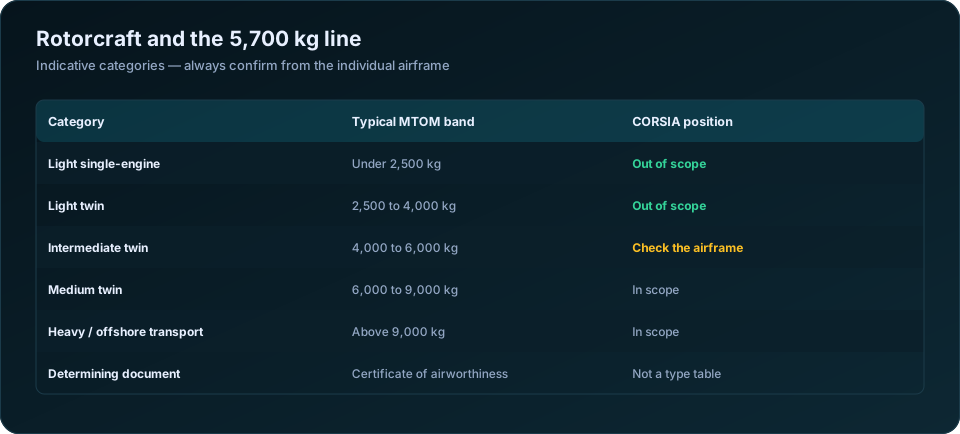
Most rotorcraft sit below the mass threshold and most rotorcraft flying is domestic, so the usual answer is no. The exceptions — offshore and heavy transport — are worth checking properly.
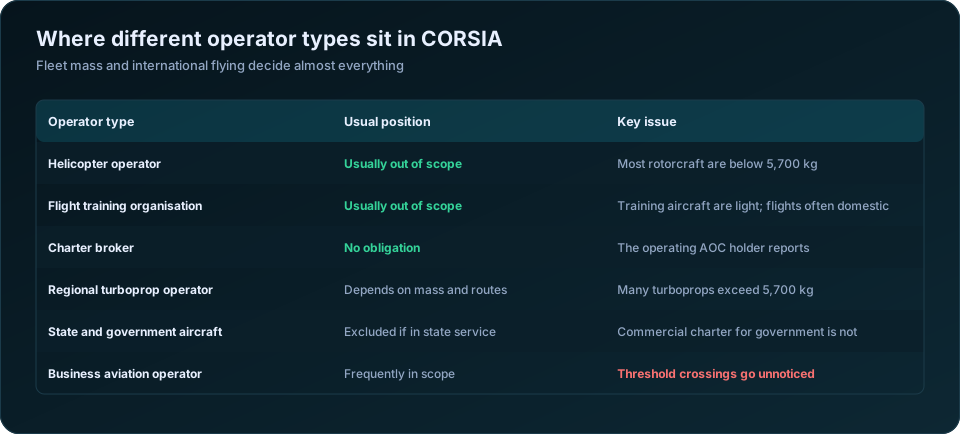
Training fleets are light and training flights are mostly domestic, so FTOs rarely have an obligation. The cases that need checking are cross-border navigation exercises and ferry flights.
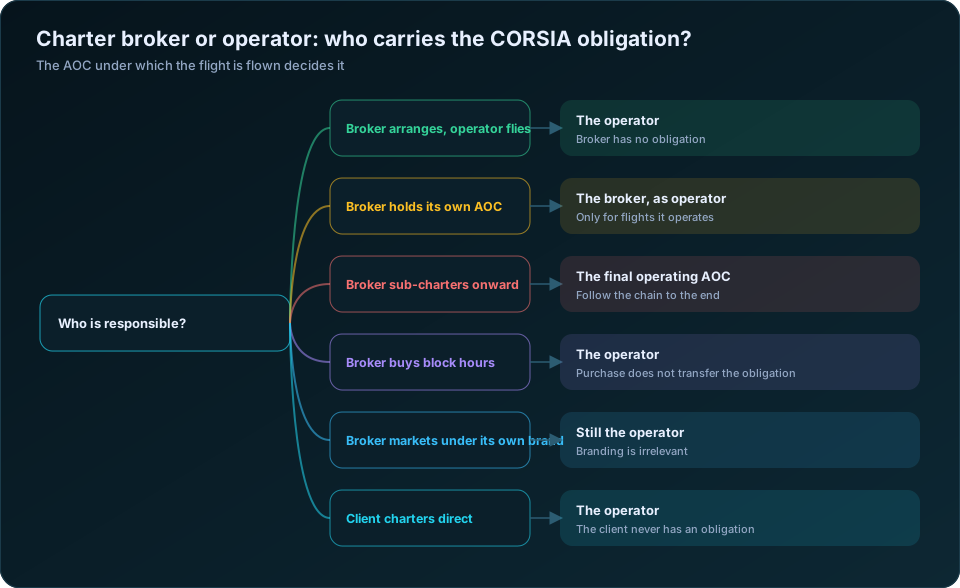
A broker arranges the flight; an operator flies it. The obligation follows the AOC, not the contract or the brand — and sub-charter chains make the distinction worth tracing carefully.
Most regional turboprops exceed the mass threshold, so scope turns on route structure. Short international sectors, high frequency and outstation fuel data create a specific compliance profile.
Military, customs and police flights are excluded. A commercial charter carrying government officials is not. The distinction turns on the service the aircraft is in, not the passenger list.
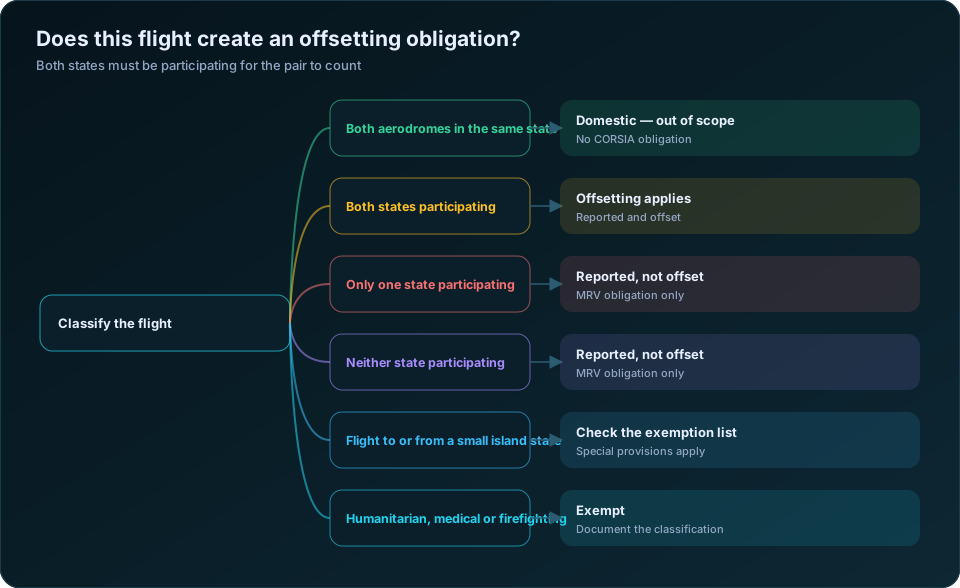
Reporting covers all international flights. Offsetting covers only flights between participating state pairs. Conflating the two is the most expensive scoping error an operator makes.
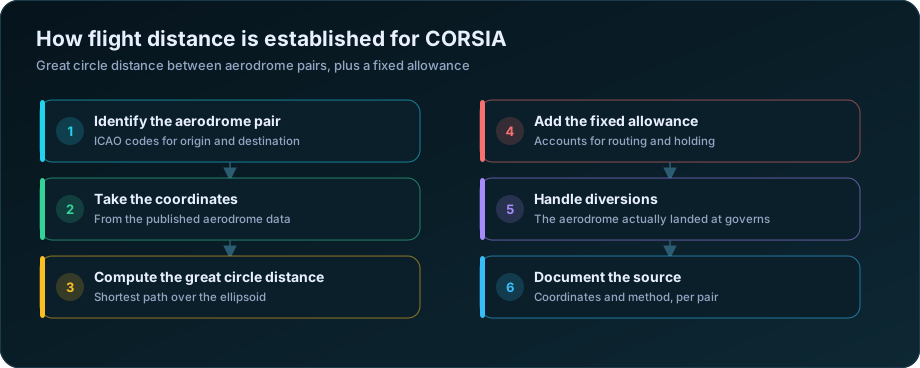
Distance matters for the CERT tool, for data gap modelling and for cross-checking fuel figures. How great circle distance is computed, what allowance is added, and where diversions change the answer.
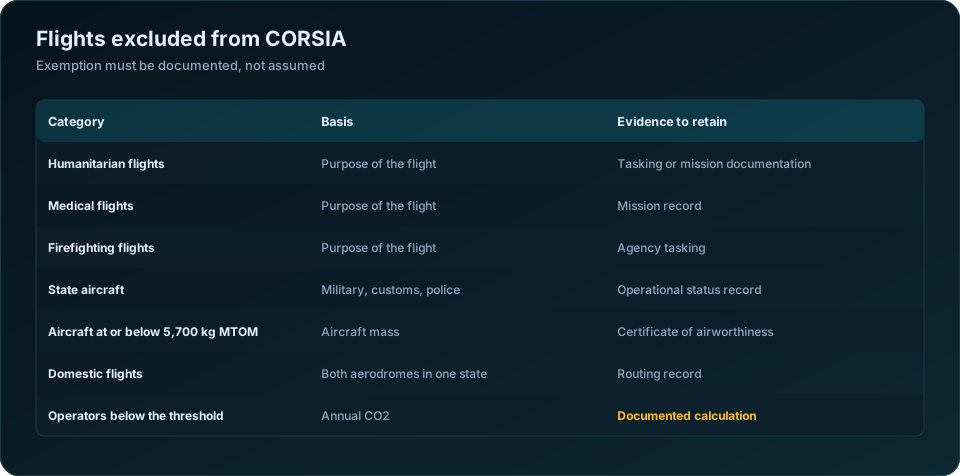
Exemptions exist for specific flight purposes and aircraft categories. Each must be documented rather than assumed, and undocumented exclusions are among the easier findings for a verifier to make.
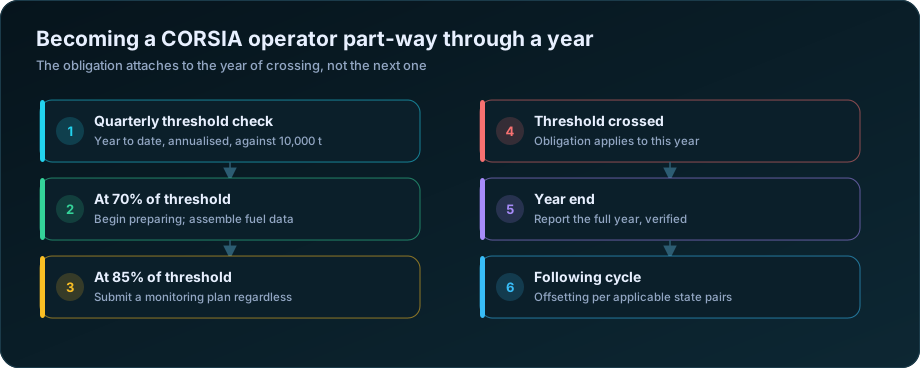
A new operator starting international flights, and an existing one growing past the threshold, face different first-year positions. What triggers the obligation, and the quarterly monitor that prevents a surprise.