
The world is at a critical juncture. Climate change is no longer a distant threat—it’s a present reality reshaping economies, ecosystems, and everyday life. As global temperatures rise and extreme weather events become commonplace, governments, corporations, and individuals are searching for effective mechanisms to reduce greenhouse gas emissions. Enter carbon credits: a market-based solution that has evolved from an experimental policy tool into a multi-billion-dollar global industry. Yet, for many, carbon credits remain shrouded in complexity, technical jargon, and skepticism. This comprehensive guide demystifies carbon credits, explaining not just what they are, but how they work, why they matter, and how they’re reshaping our approach to environmental responsibility.
At Dstechnoverse, we specialize in helping businesses navigate the complex landscape of carbon credit markets, sustainability reporting, and environmental compliance. Whether you’re looking to offset your corporate emissions, develop carbon credit projects, or integrate carbon accounting into your business operations, our expert team provides end-to-end solutions that transform environmental responsibility into strategic advantage.
At its core, a carbon credit represents permission to emit one metric ton of carbon dioxide (CO2) or an equivalent amount of another greenhouse gas. Think of it as a tradable certificate—a financial instrument that quantifies pollution. When a company or country is allocated a certain number of carbon credits, they’re essentially being given a “pollution allowance.” If they emit less than their allocated amount, they can sell their excess credits. Conversely, if they exceed their limit, they must purchase additional credits to cover the surplus.
This concept emerged from a simple economic principle: putting a price on pollution creates an incentive to reduce it. If emitting carbon dioxide has a direct financial cost, companies will naturally seek ways to reduce emissions to minimize expenses. The beauty of this system lies in its flexibility—it allows the market to find the most cost-effective solutions rather than imposing uniform regulations that may be inefficient or economically damaging.
Carbon credits exist within two primary frameworks: compliance markets and voluntary markets. Compliance markets are created by mandatory national, regional, or international climate policies, such as the European Union Emissions Trading System (EU ETS) or California’s Cap-and-Trade Program. Companies operating in these jurisdictions are legally required to hold enough credits to cover their emissions. Voluntary markets, by contrast, cater to companies and individuals who choose to offset their carbon footprint beyond legal requirements, driven by corporate sustainability goals, consumer pressure, or ethical commitments.
Before diving deeper into how carbon credits work, it’s essential to understand why we measure greenhouse gas emissions in tons of CO2 equivalent (CO2e). While carbon dioxide is the most prevalent greenhouse gas, it’s not the only one contributing to climate change. Methane (CH4), nitrous oxide (N2O), and hydrofluorocarbons (HFCs) are also significant contributors, each with different global warming potentials.
For example, methane is approximately 25 times more potent than CO2 over a 100-year period, meaning one ton of methane has the warming effect of 25 tons of CO2. To create a standardized measurement, scientists convert all greenhouse gases into CO2 equivalents based on their warming potential. This allows for consistent accounting across different types of emissions, making carbon credits a universal currency for climate action.
When a company calculates its carbon footprint, it measures total emissions across three scopes:
Carbon credits can help offset emissions across all three scopes, though the specific mechanisms and verification processes vary. At Dstechnoverse, we assist businesses in conducting comprehensive carbon footprint assessments across all three scopes, identifying emission hotspots, and developing tailored offsetting strategies that align with your sustainability goals and budget constraints.
To truly grasp how carbon credits function, you must understand the distinction between cap-and-trade systems and carbon offset projects.
Cap-and-trade, also known as emissions trading, is a regulatory approach where a government or regulatory body sets a maximum limit (the “cap”) on total emissions from specific sectors or the entire economy. This cap is then divided into allowances—essentially carbon credits—which are distributed to companies either for free, through grandfathering (based on historical emissions), or via auctions.
Here’s how it works in practice:
The European Union’s Emissions Trading System, launched in 2005, is the world’s largest cap-and-trade program. It covers approximately 40% of the EU’s greenhouse gas emissions, encompassing power stations, industrial plants, and aviation. The system has successfully reduced emissions while allowing economic flexibility.
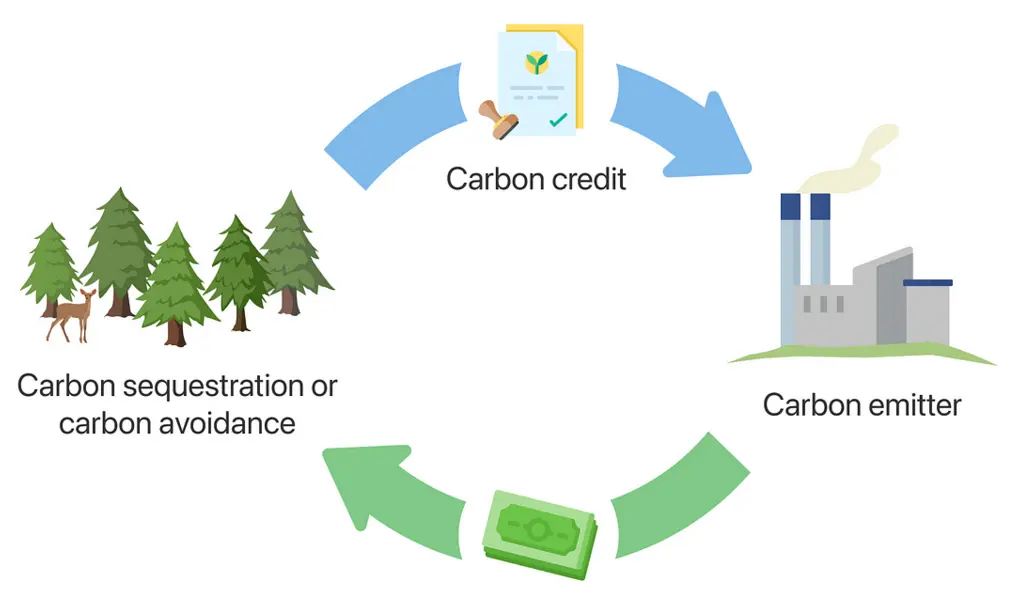
While cap-and-trade focuses on limiting emissions within a regulated system, carbon offsetting allows entities to compensate for their emissions by funding projects that reduce or remove greenhouse gases elsewhere. These projects generate carbon credits—often called carbon offsets—which can be purchased by companies or individuals seeking to neutralize their carbon footprint.
Offset projects fall into several categories:
1. Renewable Energy Projects: Installing wind turbines, solar panels, or hydroelectric plants in regions that would otherwise rely on fossil fuels. Each megawatt-hour of clean energy replaces emissions from coal or natural gas, generating carbon credits.
2. Forestry and Land Use Projects: Reforestation, afforestation (planting forests in areas that were not previously forested), and avoided deforestation. Trees absorb CO2 from the atmosphere, acting as carbon sinks. Projects like REDD+ (Reducing Emissions from Deforestation and Forest Degradation) protect existing forests from being cleared.
3. Methane Capture: Capturing methane from landfills, agricultural operations, or wastewater treatment facilities and either flaring it (converting it to less harmful CO2) or using it for energy production.
4. Energy Efficiency Initiatives: Distributing efficient cookstoves in developing countries, upgrading industrial equipment, or improving building insulation—all reducing overall energy consumption and associated emissions.
5. Carbon Capture and Storage (CCS): Technologies that capture CO2 from industrial processes or directly from the atmosphere and store it underground or in stable materials.
Each project undergoes rigorous verification by third-party standards such as Verra (Verified Carbon Standard), Gold Standard, or the Climate Action Reserve. These organizations ensure that the emissions reductions are real, measurable, permanent, and additional (meaning they wouldn’t have occurred without the carbon credit financing).
Navigating these verification standards and selecting high-quality carbon offset projects requires specialized expertise. Dstechnoverse partners with verified carbon credit providers globally, conducting due diligence on project quality, additionality, and co-benefits. We help businesses avoid low-quality offsets and ensure that every credit purchased represents genuine, verified emissions reductions that align with international standards.
Understanding the journey of a carbon credit from inception to final use illuminates the entire ecosystem. Let’s follow a single carbon credit through its lifecycle:
An organization identifies an opportunity to reduce or remove greenhouse gas emissions. For instance, a conservation NGO partners with a rural community in Indonesia to protect 10,000 hectares of rainforest that is threatened by illegal logging. Without intervention, this forest would be cleared, releasing stored carbon and eliminating a vital carbon sink.
The NGO develops a detailed project design document outlining:
This document is submitted to a carbon standard (e.g., Verra) for validation. Independent auditors review the methodology, ensuring it meets rigorous criteria for additionality, permanence, and accuracy.
The project begins. The NGO works with local communities to establish forest patrols, alternative livelihoods, and legal protections. Satellite imagery, ground surveys, and carbon stock assessments track forest health and carbon sequestration.
After a monitoring period (typically one year), an independent verifier conducts an audit. They confirm that the forest remains intact and calculate the tons of CO2 avoided. Suppose the verification shows that 50,000 tons of CO2 were prevented from entering the atmosphere. The carbon standard then issues 50,000 carbon credits—each representing one ton of CO2—to the project developer.
The NGO lists these credits on a carbon marketplace or sells them directly to corporations seeking to offset emissions. A technology company in California purchases 10,000 credits at $15 per ton, paying $150,000. This revenue funds continued forest protection and community development.
When the company uses the credits to offset its emissions, they are “retired” in a public registry, ensuring they can never be resold or double-counted. The company can now claim that it has neutralized 10,000 tons of its carbon footprint through verified offsetting.
Carbon credits serve multiple crucial functions in the global effort to combat climate change:
Unlike rigid regulations that mandate specific technologies or processes, carbon markets allow companies to choose the most cost-effective methods of reducing emissions. A manufacturer might find it cheaper to invest in energy efficiency than to purchase credits, driving innovation. Conversely, unavoidable emissions can be offset through credits, providing flexibility while still achieving net emission reductions.
Carbon credits channel billions of dollars into projects that might otherwise lack funding. Renewable energy installations in developing nations, large-scale reforestation efforts, and advanced carbon capture technologies all depend on carbon credit revenue. This creates a direct financial link between polluters and climate solutions.
As stakeholders demand climate action, companies face pressure to demonstrate measurable progress. Carbon credits provide a transparent, quantifiable way to track and communicate emissions reductions. Public registries ensure accountability, preventing greenwashing by requiring third-party verification.
Many offset projects occur in developing countries, bringing co-benefits beyond carbon reduction. Renewable energy projects provide electricity to underserved communities. Forest conservation protects biodiversity and supports Indigenous livelihoods. Clean cookstove programs improve health by reducing indoor air pollution. Carbon credits thus become a mechanism for climate finance and sustainable development.
Despite their potential, carbon credits are not without controversy. Critics raise several valid concerns:
Would the emissions reduction have happened anyway, even without the carbon credit revenue? If a wind farm was already financially viable due to government subsidies and falling turbine costs, carbon credits from that project may not represent “additional” reductions. Ensuring true additionality requires rigorous baseline analysis, which is complex and sometimes subjective.
Forest-based credits face the risk of reversal. A protected forest could burn in a wildfire or be illegally cleared in the future, releasing stored carbon. While projects include buffer reserves (holding back credits to cover potential reversals), this remains a significant concern.
If protecting one forest simply shifts deforestation to another area, the net emissions reduction is diminished. This phenomenon, called leakage, must be accounted for in project design, often by expanding protection zones or addressing root causes of deforestation.
The quality of carbon credits depends entirely on the rigor of verification. Weak standards or corrupt auditors can lead to over-crediting—issuing more credits than actual emissions reduced. Recent scandals involving questionable forestry credits have underscored the need for stronger oversight and transparency.
Some critics argue that carbon credits allow companies to continue polluting rather than making fundamental changes to their business models. Offsets can become a convenient substitute for genuine decarbonization, delaying the transition to a low-carbon economy.
These challenges are real and demand continuous improvement in carbon credit methodologies, verification processes, and regulatory oversight. However, they do not invalidate the concept itself—rather, they highlight the importance of high-integrity credits and the need for offsets to complement, not replace, direct emissions reductions.
The carbon credit landscape is evolving rapidly, driven by technological advances, regulatory expansion, and growing corporate commitments to net-zero emissions.
Forests, wetlands, and soil carbon sequestration are receiving unprecedented attention. The voluntary carbon market saw exponential growth in nature-based credits, with companies investing in projects that deliver biodiversity and community benefits alongside carbon reductions.
Direct air capture (DAC) technologies that pull CO2 directly from the atmosphere are transitioning from research to commercial deployment. While currently expensive (over $500 per ton), falling costs and policy support could make these credits increasingly viable for hard-to-abate sectors like aviation and shipping.
Blockchain technology is being integrated into carbon registries to enhance transparency, prevent double-counting, and streamline transactions. Digital monitoring, reporting, and verification (MRV) using satellite data, AI, and IoT sensors is making carbon accounting more accurate and cost-effective.
International cooperation on carbon markets received a major boost with the finalization of Article 6 rules at COP26. This framework allows countries to trade emissions reductions, potentially creating a global carbon market and ensuring environmental integrity through robust accounting.
Thousands of companies have pledged to reach net-zero emissions by 2050 or earlier. Achieving these targets will require massive investments in carbon credits, particularly for residual emissions that cannot be eliminated. This demand is driving market growth and raising quality standards.
While individuals don’t face emissions caps, many choose to offset personal carbon footprints from flights, driving, or home energy use. Reputable platforms like Gold Standard, Verra, and South Pole allow you to calculate your emissions and purchase verified offset credits. When choosing offsets, prioritize projects with strong co-benefits (community development, biodiversity) and transparent verification.
Companies can engage with carbon credits through several pathways:
1. Compliance: If operating in a regulated jurisdiction, obtain the necessary allowances through auctions or trading.
2. Voluntary Offsetting: Purchase high-quality credits to neutralize unavoidable emissions, supporting your sustainability goals and stakeholder expectations.
3. Internal Carbon Pricing: Implement an internal carbon fee, using the revenue to fund efficiency projects or offset purchases, driving behavioral change within the organization.
4. Investment in Carbon Projects: Develop or co-invest in offset projects directly, gaining deeper engagement and potential revenue streams.
5. Supply Chain Engagement: Work with suppliers to reduce Scope 3 emissions and explore collective offset strategies.
Regardless of approach, prioritize verified, additional, and permanent credits. Beware of cheap, low-quality offsets that undermine credibility.
Dstechnoverse offers comprehensive carbon credit solutions for businesses of all sizes:
Our team of environmental specialists, data analysts, and sustainability consultants ensures that your carbon credit investments deliver genuine impact while positioning your business as a climate leader in your industry.
Carbon credits are not a panacea for climate change. They cannot substitute for the urgent need to decarbonize energy systems, transform transportation, and reimagine industrial processes. However, when used correctly, they are a powerful tool—driving capital toward climate solutions, providing economic flexibility, and enabling global cooperation on emissions reduction.
As the world races toward net-zero targets, carbon credits will play an increasingly central role. Understanding how they work, recognizing their limitations, and demanding high-integrity standards will ensure they contribute meaningfully to a sustainable future. Whether you’re a business leader, policymaker, investor, or concerned citizen, engaging with carbon credits thoughtfully and critically is essential to harnessing their full potential in the fight against climate change.
The carbon credit system is complex, evolving, and imperfect—but it is also one of the most innovative mechanisms humanity has devised to align economic incentives with environmental imperatives. By understanding how carbon credits work, you’re better equipped to navigate, critique, and leverage this system in service of a healthier planet.
Navigating the carbon credit landscape requires expertise, market knowledge, and strategic vision. At Dstechnoverse, we transform the complexity of carbon markets into actionable solutions that drive real environmental impact while supporting your business objectives.
Our Carbon Credit Services Include:
✓ Carbon Footprint Calculation & Reporting – Comprehensive GHG accounting across all emission scopes using ISO 14064 and GHG Protocol standards
✓ High-Quality Credit Sourcing – Access to verified carbon offsets from renewable energy, forestry, methane capture, and technology-based removal projects
✓ Due Diligence & Quality Assurance – Rigorous evaluation ensuring additionality, permanence, and co-benefits of every carbon credit
✓ Net-Zero Strategy Development – Integrated decarbonization roadmaps combining emissions reduction, renewable energy transition, and strategic offsetting
✓ Sustainability & ESG Reporting – Compliance with CDP, TCFD, GRI, and other sustainability frameworks that communicate your climate action to stakeholders
✓ Carbon Market Navigation – Expert guidance through compliance markets (EU ETS, RGGI, California Cap-and-Trade) and voluntary carbon markets
✓ Corporate Carbon Neutrality Programs – End-to-end solutions for achieving and maintaining carbon-neutral certification
✓ Supply Chain Carbon Management – Scope 3 emissions analysis and supplier engagement strategies
✓ Carbon Credit Project Development – Advisory services for organizations looking to develop their own carbon offset projects and generate credits
Whether you’re taking your first steps toward carbon neutrality or scaling an established sustainability program, Dstechnoverse provides the expertise and partnerships to make your climate commitments a reality.
Ready to turn your environmental goals into measurable action? Contact Dstechnoverse today and discover how strategic carbon credit investment can position your business as a leader in the transition to a low-carbon economy.
Dstechnoverse – Your Strategic Partner in Carbon Management and Environmental Sustainability