
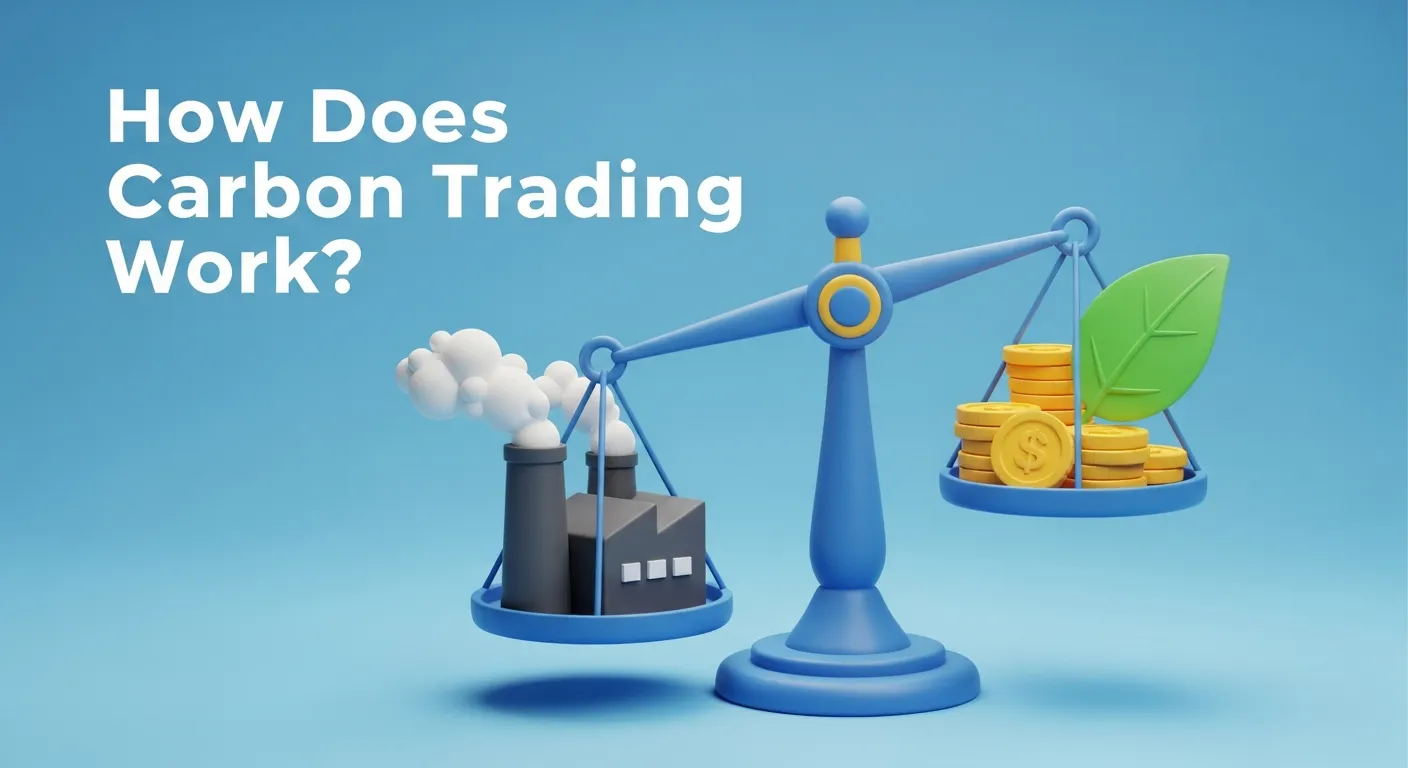
Climate change is no longer just a buzzword; it is a global emergency. As nations and corporations race to reduce their environmental footprint, new mechanisms have emerged to help balance economic growth with sustainability. One of the most effective tools in this battle is the Carbon credit trading schemes. But what exactly is this system? Simply put, it turns pollution into a commodity that can be bought and sold. This market-based approach encourages companies to lower their greenhouse gas emissions by putting a price on carbon. Whether you are a business owner, a student, or a policy enthusiast, understanding how this system works is crucial for the future of our planet.
In this guide, we will break down the carbon credit trading scheme, how the carbon market in India is taking shape, and the benefits of these environmental financial tools.
To understand the carbon credit trading scheme, we first need to look at carbon credits meaning.
A carbon credit is a digital certificate or permit that represents the right to emit one ton of carbon dioxide (CO₂) or an equivalent amount of other greenhouse gases.
A carbon credit trading scheme is a marketplace where these credits are exchanged. The primary purpose of this system is to reduce the total amount of greenhouse gases emitted globally. It creates a financial incentive for companies to go green. If a company emits less than its allowed limit, it earns credits. If it emits more, it must buy credits from others.
This system transforms carbon emissions from an environmental burden into a tradable asset, often referred to as a carbon trading system.
The working of a carbon credit trading scheme might sound complex, but it generally follows a “Cap-and-Trade” model. Here is a step-by-step explanation of the process:
When discussing carbon credit trading, it is essential to note that not all markets are the same. Generally, they fall into two categories:
This is a mandatory market created by national or international regimes. Large polluters are legally required to participate. The most famous example is the European Union’s Emissions Trading Scheme (EU ETS). Here, trading is driven by law and regulation.
In this market, participation is optional. Companies, individuals, or NGOs purchase credits to offset their carbon footprint voluntarily. This is often done to meet corporate sustainability goals (ESG) or for branding purposes. These credits often come from a carbon offset program, such as reforestation projects or community solar initiatives.
India is rapidly positioning itself as a leader in the global climate fight. The government has recognized the potential of a carbon market in India to help achieve its target of Net Zero emissions by 2070.
Previously, India primarily participated in the Clean Development Mechanism (CDM) under the Kyoto Protocol. However, recent legislative changes have set the stage for a domestic market.
Energy-intensive sectors like iron, steel, aluminum, and cement are expected to be the first participants. By adopting green technologies, Indian industries can not only meet compliance but also sell credits to international buyers, boosting the economy.
Adopting a carbon credit trading scheme offers benefits that go beyond just environmental protection. Here is why it matters:
While the carbon credit trading scheme is a powerful tool, it is not without flaws. Critics and analysts point out several challenges:
One of the most common questions is about the carbon credit price. The value of a carbon credit is not fixed; it varies based on supply and demand, much like a stock market.
As regulations tighten globally, the price of carbon credits is expected to rise, making pollution more expensive for businesses.
The future of the carbon credit trading scheme looks robust. As the world moves toward the 2030 and 2050 climate goals, these markets will become more integrated.
We are moving towards a globalized market under Article 6 of the Paris Agreement, which allows countries to trade carbon credits with each other. This will standardize the emissions trading scheme across borders.
Blockchain technology is being introduced to track carbon credits, ensuring transparency and preventing double-counting. Furthermore, investors are increasingly looking at Environmental, Social, and Governance (ESG) scores, forcing companies to take carbon credit trading seriously.
For India, the domestic market will likely merge with international standards, opening up billions of dollars in trade opportunities for the renewable energy sector.
A carbon credit trading scheme is a market-based system that allows companies and governments to buy and sell permits (credits) that allow them to emit a specific amount of carbon dioxide. It aims to reduce global greenhouse gas emissions.
Anyone can buy carbon credits. In compliance markets, regulated companies must buy them. In voluntary markets, businesses, non-profits, and even individuals can buy credits to offset their personal or corporate carbon footprint.
Currently, India is in the transition phase. The government has notified the Carbon Credit Trading Scheme (CCTS) in 2023, which will make participation mandatory for specific high-emitting sectors (obligated entities) determined by the Bureau of Energy Efficiency.
Companies earn credits by reducing their emissions below the set limit or by investing in projects that remove or avoid emissions, such as wind farms, solar power plants, or reforestation projects.
Yes, they can be. If a company reduces its emissions significantly, it can sell its surplus credits to other companies for a profit. Additionally, developers of green projects generate revenue by selling the credits their projects create.
The Carbon credit trading schemess represents a vital bridge between economic reality and environmental necessity. By putting a price on carbon, it forces industries to innovate and rewards those who prioritize the planet.
For a developing giant like India, the establishment of a domestic carbon market in India is a game-changer. It not only helps in meeting climate goals but also drives investment into renewable energy. As the world unites against climate change, carbon credit trading will undoubtedly be at the forefront of the solution.
Whether through a voluntary carbon market or a strict emissions trading scheme, the message is clear: reducing emissions is no longer just a moral choice; it is a financial one.