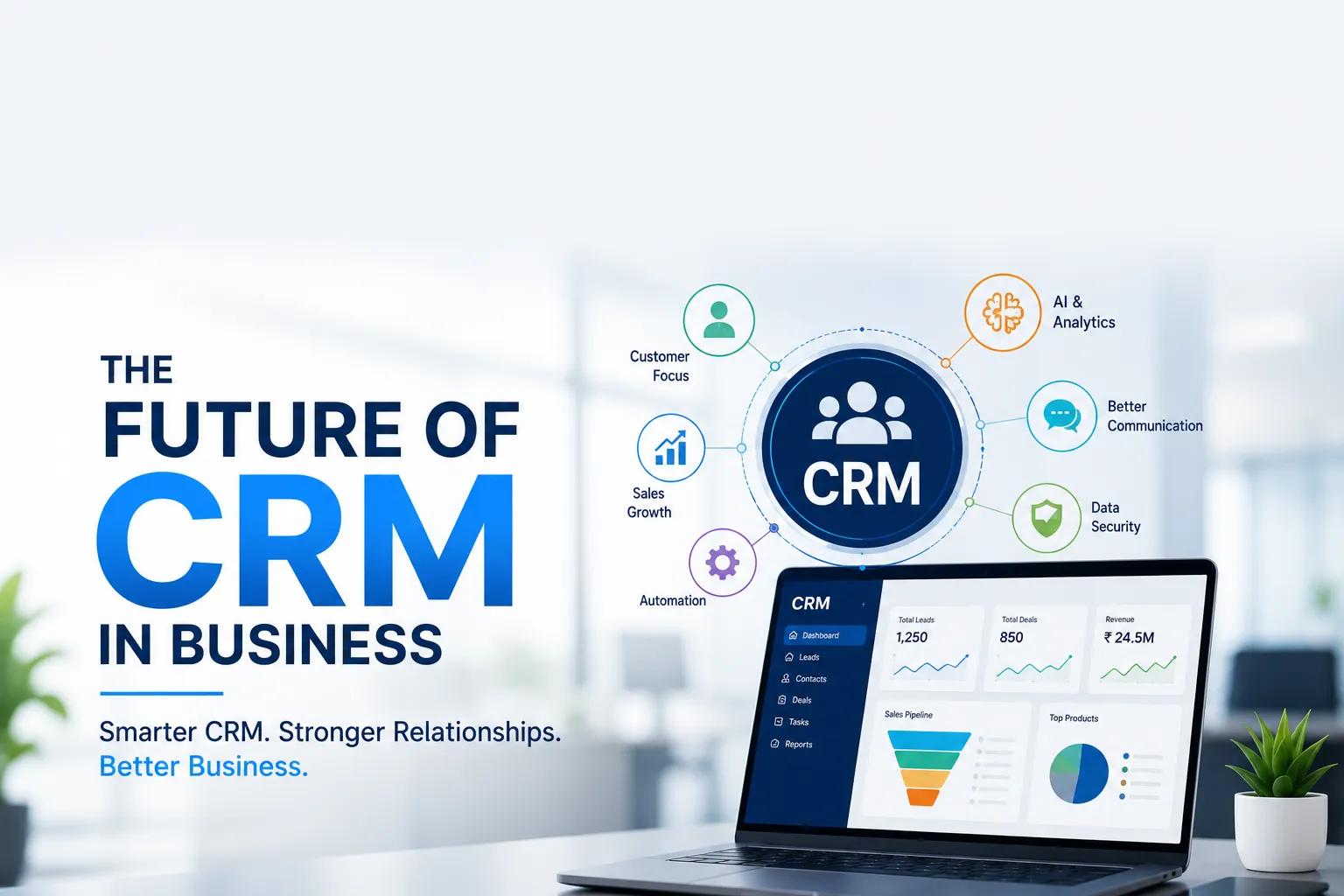
Future of CRM in Business
Customer relationship management has come a long way from spreadsheets and basic contact databases. Today, businesses are moving toward intelligent, AI-powered CRM systems that do far more than store customer data — they predict behavior, automate workflows, and deliver personalized experiences at scale.
The future of CRM in business is not just about software upgrades. It is about transforming how companies connect with customers, make decisions, and drive sustainable growth.
What is the Future of CRM in Business?
The future of CRM in business refers to the evolution of customer management systems from traditional record-keeping tools to intelligent platforms powered by artificial intelligence, machine learning, and real-time data analytics.
Modern CRM is shifting from reactive to proactive. Instead of simply tracking past interactions, next-generation CRM systems will anticipate customer needs, recommend actions, and automate entire sales and support journeys — making businesses faster, smarter, and more customer-centric.
Major Trends Shaping the Future of CRM
Several powerful trends are redefining CRM technology trends across industries:
- Artificial Intelligence and Machine Learning: AI-powered CRM platforms now analyze millions of data points to uncover patterns, score leads, and personalize communication automatically.
- Predictive Analytics in CRM: Businesses can forecast customer behavior, churn risk, and sales opportunities before they happen — giving teams a serious competitive edge.
- CRM Automation: Repetitive tasks like follow-up emails, lead assignments, and data entry are being fully automated, freeing sales and support teams to focus on high-value work.
- Omnichannel Customer Communication: Future CRM solutions unify email, chat, social media, and voice into one platform for seamless customer engagement technology.
- Cloud CRM Solutions: Scalable, flexible, and accessible from anywhere — cloud-based CRM platforms are now the standard for growing businesses, including startups and SMEs in India.
How AI-Powered CRM Will Transform Businesses
AI is the most disruptive force in CRM software innovation today. Here is how it is changing the game:
Personalized Customer Experiences: Machine learning CRM tools analyze customer data analytics to deliver tailored recommendations, offers, and communications — making every interaction feel one-on-one.
Smart Sales Forecasting: Sales automation software powered by AI gives teams accurate revenue predictions based on real-time pipeline data, not guesswork.
Automated Marketing Campaigns: Intelligent customer management systems can trigger personalized email sequences, retargeting ads, and nurture flows without manual input.
Faster Customer Support: AI-powered chatbots and automated ticketing systems resolve common queries instantly, improving response times and customer satisfaction.
Better Decision-Making: With advanced CRM solutions, leadership teams gain real-time dashboards and actionable insights — enabling confident, data-driven decisions.
Future CRM systems will help businesses automate processes, analyze customer behavior, improve engagement, and deliver personalized experiences at scale.
Benefits of Future CRM Technologies for Businesses
Adopting smart CRM platforms offers measurable advantages:
- Increased team productivity through workflow automation
- Higher customer satisfaction with faster, personalized responses
- Improved sales performance through predictive lead scoring
- Better data-driven decisions using customer data analytics
- Reduced operational costs by eliminating manual processes
- Scalable business growth with cloud CRM solutions that grow with you
For Indian startups and SMEs, CRM for small businesses is now more accessible than ever — with affordable, cloud-based platforms designed for growing operations.
Challenges Businesses May Face While Adopting Future CRM
CRM digital transformation is not without obstacles. Common challenges include:
- Data Privacy Concerns: Businesses must ensure secure customer data management and compliance with data protection regulations.
- Employee Training: Teams need time and support to adapt to new automated customer interactions and CRM workflows.
- Integration Challenges: Connecting CRM with existing tools like ERP, e-commerce platforms, or marketing software can require technical expertise.
- Choosing the Right Platform: With so many options available, selecting the right AI-based CRM software in India that fits your business model and budget is critical.
How Dstechnoverse Helps Businesses Prepare for the Future of CRM
Dstechnoverse helps businesses adopt future-ready CRM solutions, integrate automation technologies, and build stronger customer relationships through innovative digital strategies.
Their services include:
- AI-Powered CRM Implementation tailored to your industry and goals
- CRM Customization to match your unique sales and support workflows
- Workflow Automation to eliminate repetitive tasks and improve efficiency
- Customer Data Management for accurate, centralized, and secure data
- Business Process Optimization to streamline operations end-to-end
- Technical Support and Training to ensure smooth adoption and ROI
Whether you are a startup, a growing SME, or an established enterprise, Dstechnoverse delivers CRM consulting services and business automation solutions India businesses can rely on.
Conclusion
The future of CRM in business is intelligent, automated, and deeply personalized. AI, predictive analytics, and cloud technology are reshaping how businesses build relationships, close deals, and retain customers for the long term.
Companies that invest in future CRM trends today will gain a significant advantage tomorrow — in customer loyalty, operational efficiency, and revenue growth.
Ready to future-proof your business with the right CRM strategy? Contact Dstechnoverse today and take the first step toward smarter customer relationship management.
FAQ
Q1. What is the future of CRM in business?
The future of CRM in business involves AI-powered automation, predictive analytics, and cloud-based platforms that help companies manage customer relationships more intelligently, efficiently, and at scale.
Q2. How will AI change CRM systems?
AI will enable CRM systems to predict customer behavior, automate marketing and sales tasks, personalize communication, and provide real-time insights — reducing manual effort and improving business outcomes.
Q3. Why is future CRM important for small businesses in India?
Future CRM tools help Indian SMEs and startups compete with larger companies by automating operations, improving customer experiences, and making smarter business decisions without needing large teams.
Q4. What are the latest CRM technology trends to watch?
Key CRM technology trends include AI and machine learning integration, predictive analytics, omnichannel communication, cloud CRM solutions, and intelligent workflow automation.
Q5. How can Dstechnoverse help businesses adopt future CRM solutions?
Dstechnoverse offers end-to-end CRM implementation, customization, automation, and training services — helping businesses across India transition to future-ready CRM systems with confidence.
Further Reading
- CRM software price in India: costs and budgets
- How to choose a CRM system
- CRM implementation, step by step
- CRM data migration guide
- CRM vs ERP: the difference
- CRM implementation service
Frequently Asked Questions
How is AI changing CRM?
AI features now draft emails and replies, summarise customer history, score leads, transcribe calls and suggest next steps. They work only as well as the data in the CRM, so clean records matter more than ever.
Will messaging replace email in CRM?
For many Indian businesses, WhatsApp and other messaging channels already carry most customer conversations. Modern CRMs integrate them so that messages are logged against the customer record rather than lost in phones.
Are CRMs becoming more industry-specific?
Yes. Many vendors offer templates and modules for sectors such as real estate, education, healthcare and manufacturing, which shortens implementation when your process fits the template.
What should a business do now to prepare?
Clean and consolidate customer data, connect the channels customers actually use, and define the sales and support process clearly. Those steps make any future CRM feature useful.